
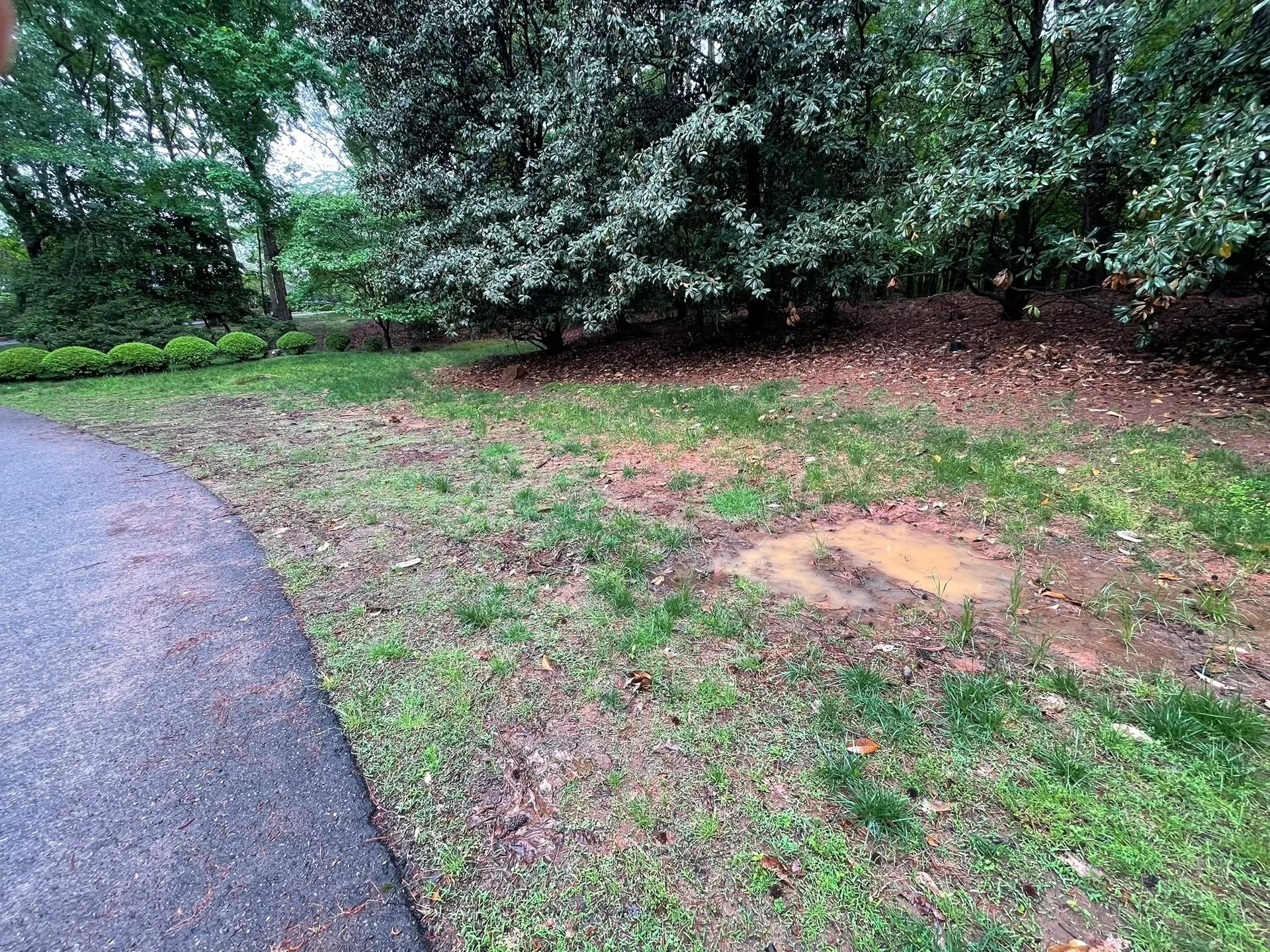
Yard Drainage in Spartanburg, SC That Moves Water Away
Upstate Precision Landscaping fixes soggy lawns, pooling water and washouts with French drains, grading and downspout drainage. Free estimates across Spartanburg County.
Yard Drainage for Spartanburg, SC Properties
Drainage work moves rainwater where it should go: away from your house, off your lawn and out of your beds. Upstate Precision Landscaping provides yard drainage in Spartanburg, SC and nearby Upstate towns for homeowners tired of standing water, muddy patches and soil washing away after storms. Call (803) 517-8677, Monday to Friday, 8 AM to 5 PM, for a free estimate.
Drainage trouble is common here. Clemson Cooperative Extension points out that clay soils and 40 to 50 inches of yearly rain make poor drainage a frequent problem in South Carolina yards, and the State Climatology Office lists Spartanburg County's 30-year normal at just over 50 inches of rain a year.
Signs Your Yard Has a Drainage Problem
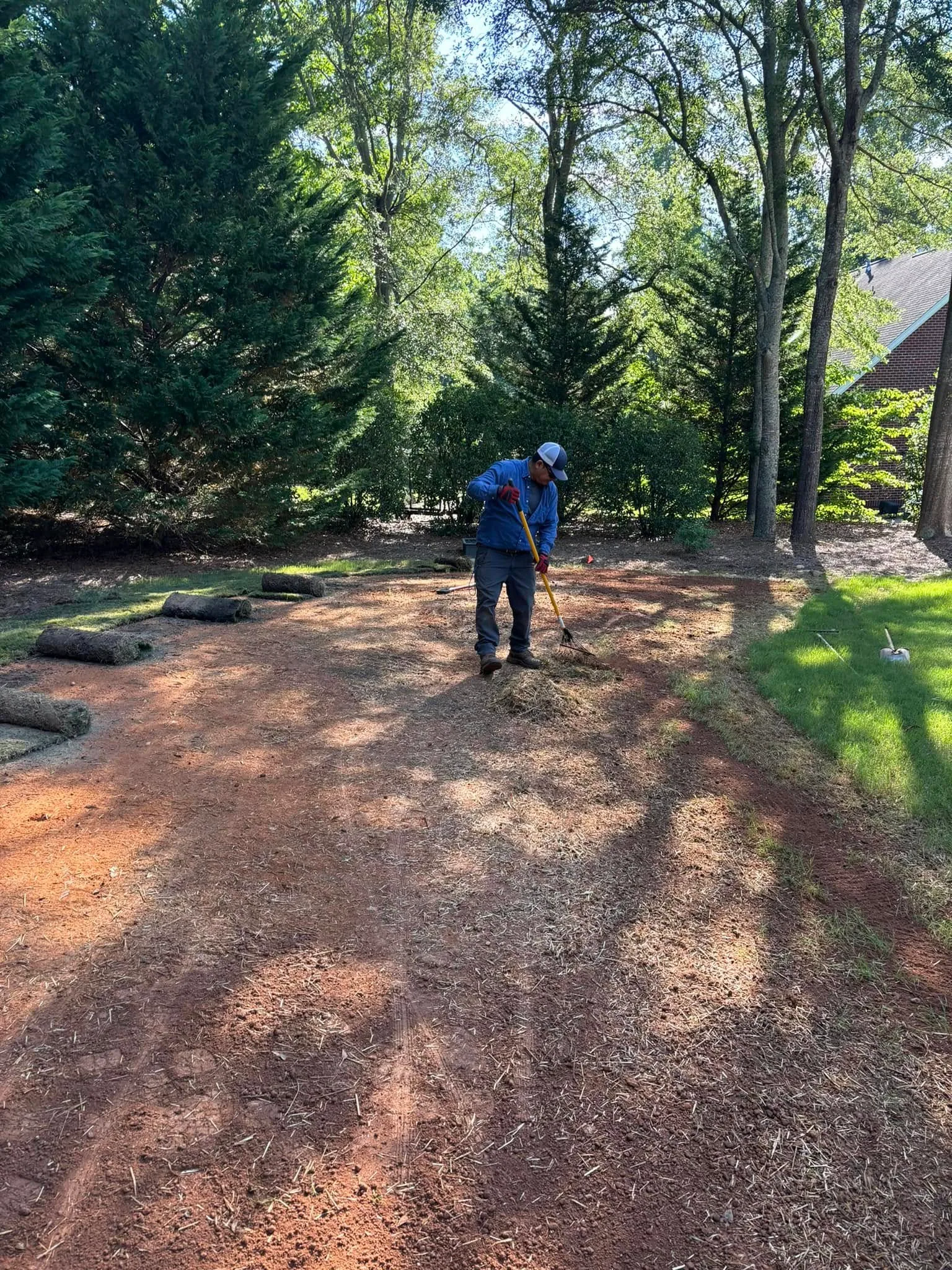
Water problems in a yard rarely fix themselves. If you see any of these after a good rain, it is time to find out where the water is going:
- Puddles that sit on the lawn for a day or more
- Water collecting against the foundation
- Soggy grass, moss or bare patches in low spots
- Mulch and soil washing onto walkways and the driveway
- Ruts and small gullies forming on slopes
- Downspouts dumping water right beside the house
How Our Drainage Process Works
Good drainage starts with understanding where the water comes from. We follow the same steps on every property, small or large.
-
Tracing the Water
We walk the property with you, follow the path water takes across the yard and ask where trouble shows up after rain.
-
Plan and Free Estimate
We explain what is causing the problem and which fix fits it best. You get a free estimate that spells out the work.
-
Installation
We install the drains, regrade the surface or route the downspouts, checking that water has a steady path to a safe outlet.
-
Restoring the Yard
We backfill trenches and smooth disturbed areas, so the yard looks finished when we leave.
-
Final Walkthrough
We walk the finished work with you and show you where the water will now go.
French Drain Installation for Soggy Lawns
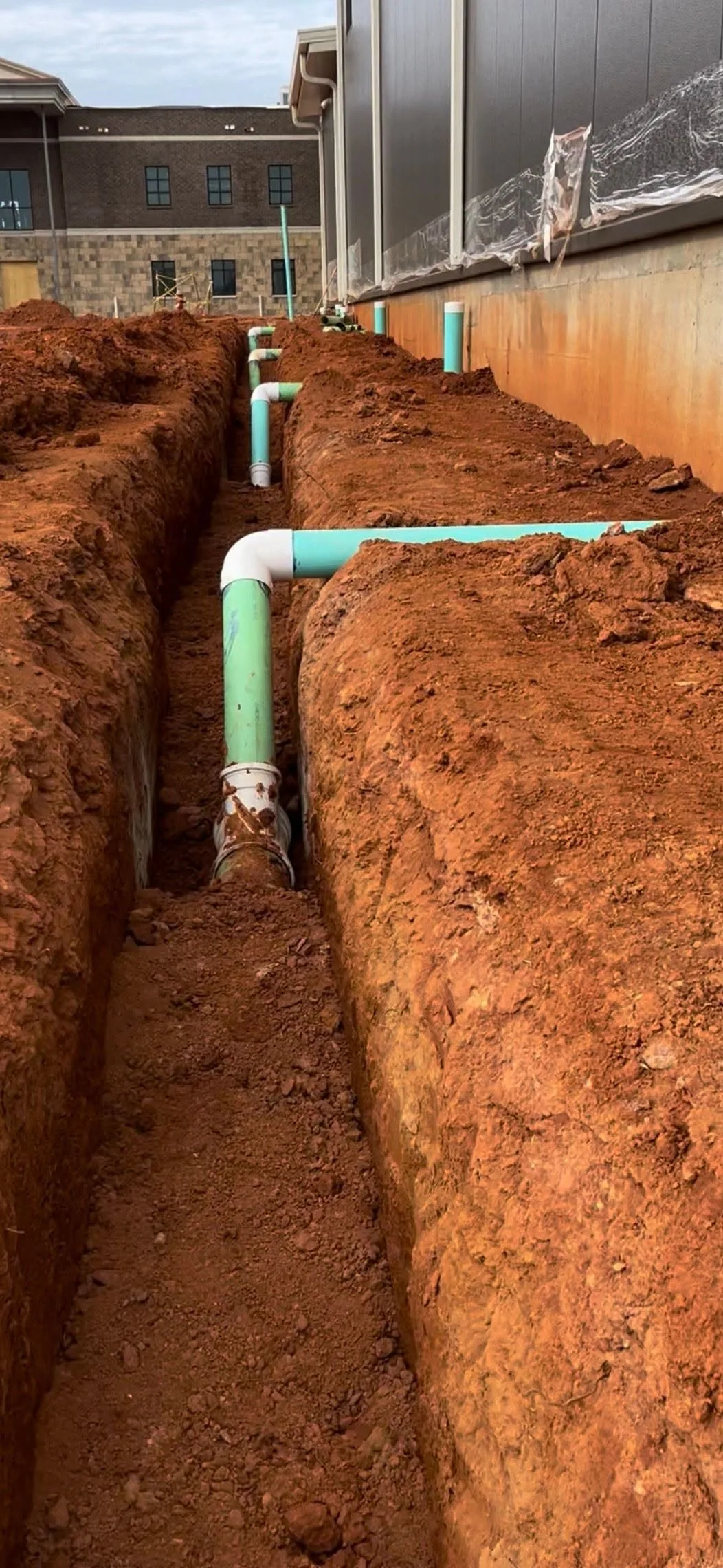
A French drain is a trench filled with gravel around a perforated pipe. It collects water below the surface and carries it to a better place, such as a lower part of the property. French drain installation works well for wet strips along a foundation, at the bottom of a slope or across a low part of the lawn.
The route matters as much as the pipe. We plan where the water enters, how it flows and where it comes out before we dig, and we set the trench with a steady fall so water keeps moving instead of sitting in the line.
In clay soil, water soaks in slowly, so a drain also needs to catch water near the surface. We size and place each drain for the amount of water your yard actually sees, based on what we find during the walkthrough.
Yard Grading and Downspout Drainage
Yard grading reshapes the surface so water runs where you want it. Ground that slopes toward the house, low spots that hold puddles and lawns that rise in the wrong places can all be corrected with grading. Clemson Cooperative Extension lists regrading, installing drains and adding swales as fixes for low-lying ground that collects water, and notes that these improvements help prevent erosion and turf loss.
Roof water is often the biggest source of trouble. A single roof sends a lot of water to a few downspouts, and Clemson stresses that water coming off the roof must flow away from the home's foundation. Downspout drainage carries that water through extensions or buried pipe to a spot where it can spread out safely.
Grading and downspout work often go together. Fixing the slope near the house and moving roof water away from it solves many wet-yard problems at once.
Erosion Control and Water Management on Slopes
Water running across bare soil carries the soil with it, leaving ruts, washed-out beds and mud on the driveway. Erosion control slows that water down and keeps the ground in place. For bare, sloped soil, Clemson Cooperative Extension recommends erosion blankets, straw wattles or silt fences to stabilize the soil and prevent runoff.
Lasting water management usually combines several fixes: grading to spread water out, drains to carry it away and plant cover to hold the surface. On steeper ground, a retaining wall installation can hold the slope while the rest of the plan handles the water.
What Affects the Cost of Drainage Work
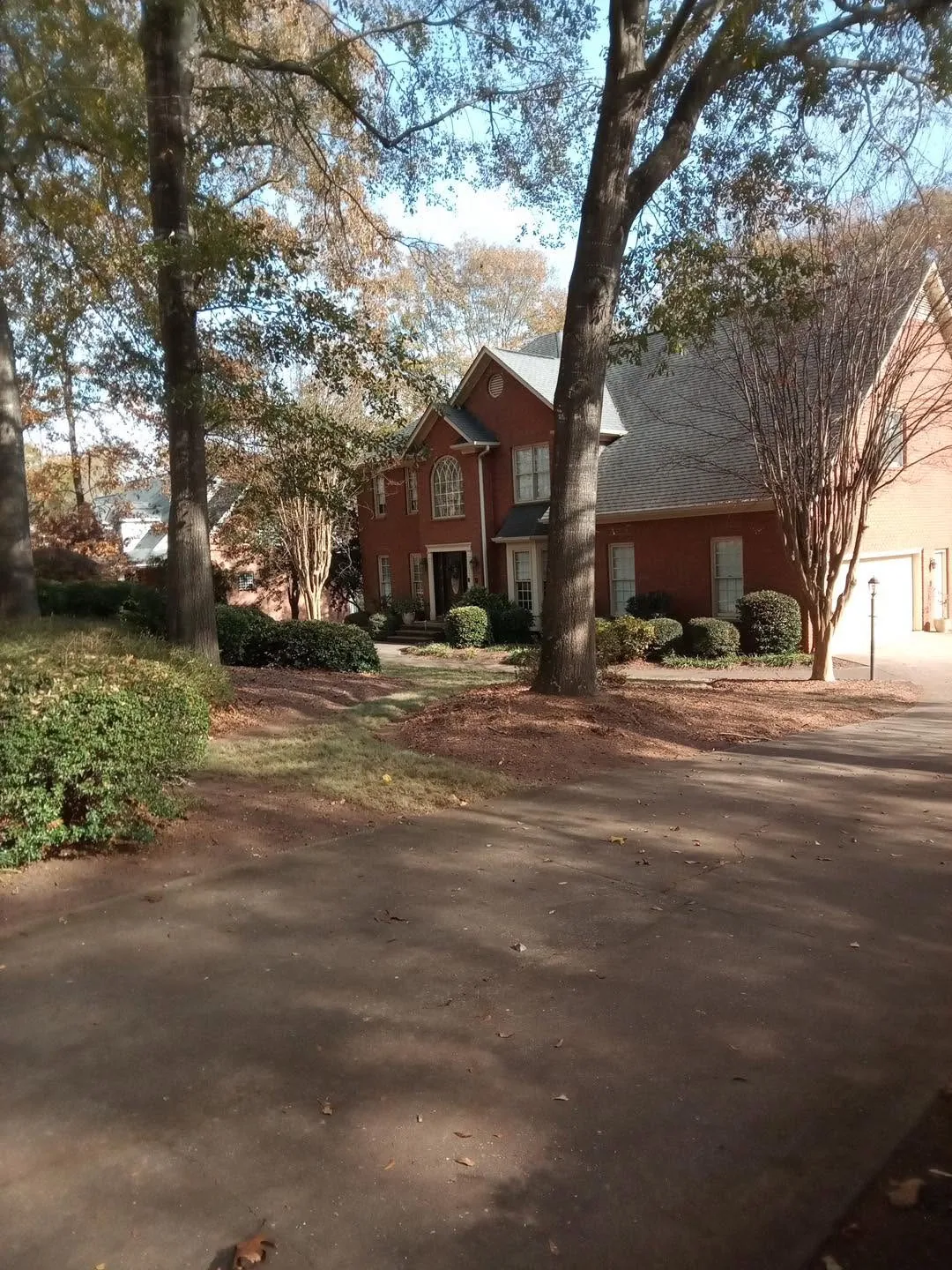
Every yard drainage job in Spartanburg, SC is priced after we see how water moves across the property, and the estimate is free. These are the main things that shape the price:
We explain why we recommend each part of the work. You can see what solves the problem and what is optional.
- The type of fix, such as a French drain, grading or downspout lines
- The length of drain line or the size of the area to regrade
- How far the water has to travel to a safe outlet
- Soil conditions and slope on the site
- Access for equipment around the house and yard
- How much of the lawn or beds need to be restored
Why Choose Upstate Precision Landscaping for Drainage Work
Drainage is easy to get wrong when it is rushed. We look for yard drainage solutions built for long-term function, rather than a quick fix that only moves the puddle a few feet. That practical approach comes from 8 years of landscaping and lawn care experience.
We hold every job to the same standards: consistency, attention to detail and personalized service. Expect responsive communication, organized and dependable scheduling and a plan that fits how you use your yard.
Yard Drainage in Roebuck, Woodruff and Nearby Towns
We handle yard drainage in Spartanburg, SC and solve water problems for homeowners across the county and the nearby Upstate. Read about our work as a landscaper in Roebuck, SC, a landscaper in Woodruff, SC, a landscaper in Reidville, SC and a landscaper in Drayton, SC.
Once the water is under control, a bare or damaged lawn can be replaced with our sod installation service. See every one of our lawn and landscape services to plan the rest of the yard, and call about yard drainage in Spartanburg, SC whenever water starts causing trouble.
Do French drains work in clay soil?
French drains can work in clay soil when they are planned for it. Clay absorbs water slowly, so the drain has to catch water close to the surface and carry it to an outlet with steady fall. Getting the route, depth and outlet right matters more in clay than in sandy soil. We check how water moves across your yard before recommending a drain.
How do I know if my yard needs grading?
Your yard likely needs grading if the ground slopes toward your house, if puddles form in the same spots after every rain, or if water runs across the lawn and washes out beds. Grading reshapes the surface so water flows away from the home. During a free walkthrough, we can show you where the slope is working against you.
Where should downspout water go?
Downspout water should go well away from your foundation, to a part of the yard that can absorb it or carry it off without causing erosion. Water dumped right beside the house can soak the ground around the foundation and wash out nearby beds. Extensions or buried drain lines can move it to a safer spot, depending on your yard.
Will drainage work tear up my lawn?
Drainage work does disturb some of the yard, since drains and pipes have to go in the ground. We keep trenches as narrow as the job allows, backfill them when the work is done and smooth the disturbed areas. If a large section of grass is affected, we can talk about sod so the lawn looks finished sooner.
When is the best time to fix yard drainage?
The best time to plan a drainage fix is right after you see the problem, while you can still point to where water collects and how it flows. Notes or photos taken during a heavy rain help a lot. Installation then depends on soil conditions, since very wet ground is hard to work. We schedule the work around the weather and your calendar.
Get Your Yard Dry and Usable Again
Standing water and washouts get worse with every storm, and the right fix starts with a walkthrough. For yard drainage in Spartanburg, SC, call Upstate Precision Landscaping at (803) 517-8677, Monday to Friday, 8 AM to 5 PM, or request a free drainage estimate online.